
Dip powder and gel both give a glossy, long-wearing manicure, but they behave differently. Dip powder builds a harder, slightly thicker layer that cures with an activator and air, while gel polish is thinner, more flexible and needs a UV or LED lamp to set. Which is better depends on how strong your nails are, how you remove them and how much the hygiene of the process matters to you.
In this guide
How each system works
Gel polish is a liquid made from monomers and oligomers that harden when a photoinitiator in the formula is hit by UV or LED light. A typical gel manicure is a base coat, two or three thin colour coats and a top coat, each cured under a lamp for a short time. The finished layer bends a little with the nail.
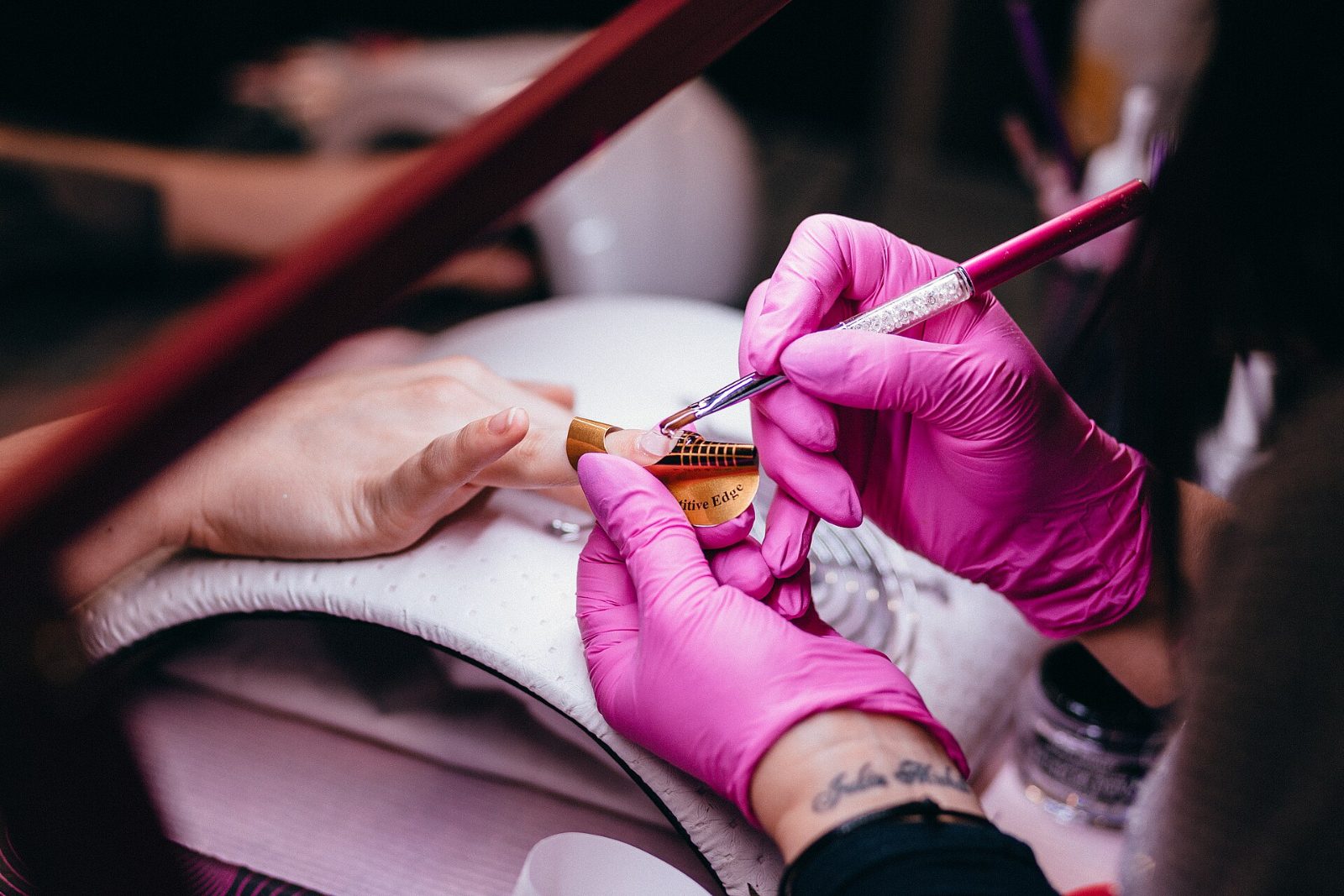
Dip powder uses a very fine acrylic powder and a set of liquids. A bonding liquid or base is brushed onto the nail, the nail is dipped into powder (or the powder is poured over it), and the layers are built up before an activator hardens everything. No lamp is involved. The result is rigid, a little like a thin acrylic overlay.
At a glance
- Gel: lamp-cured, thin, flexible, usually soaked off with acetone and foil
- Dip: activator-cured, thicker, rigid, soaked off for longer and often filed down first
- Both contain acrylate chemistry, so neither is automatically allergy-free
Side-by-side comparison
| Factor | Gel polish | Dip powder |
|---|---|---|
| Curing | UV or LED lamp | Activator liquid, no lamp |
| Feel on the nail | Thin, flexible | Harder, slightly thicker |
| Typical wear | Around two to three weeks | Often three weeks or a little more |
| Removal | Soak-off, usually quicker | Soak-off, usually longer, top layer filed first |
| Colour range | Very wide, easy to layer and do art | Wide, but detailed art is harder |
| Best for | Natural-looking shine, frequent colour changes | Extra strength on short to medium nails |
Wear times vary widely between people. Nail shape, how you use your hands and the quality of prep matter more than the label on the bottle.
Strength and how it feels day to day
If your nails bend easily, dip powder can feel reassuring because it adds a stiff layer. That stiffness is also its weak point: when a rigid coating sits on a flexible nail and takes a hard knock, it can crack rather than bend. Gel follows the nail better and tends to chip at the tip rather than crack across.
Many people in the UAE type for long hours and move between hot outdoor air and cold air conditioning. Gel usually feels lighter and less noticeable in that routine. Dip suits people who want a hard, protective shell for a few weeks, for example during travel when a salon visit is not possible.
Hygiene: the shared jar question
The biggest practical difference is how the powder is applied. In some salons clients dip their fingers straight into a shared jar of powder. Dermatology and public health sources have raised concerns that this could pass bacteria or fungi between clients, especially if someone has an infection around the nail.
A better practice is the pour-over method: the technician pours powder over your nail above a separate dish, and the excess is thrown away rather than returned to the jar. In the UAE, beauty salons are licensed and inspected by local authorities such as Dubai Municipality and the health or municipal departments in other emirates, and hygiene expectations are clear. It is still reasonable to ask how the salon handles dip powder before you book.
What to ask the salon
- Do you use the pour-over method or individual portions?
- Are files and buffers new or single-client?
- Are metal tools cleaned and sterilised between clients?
Removal and nail damage
Neither system should damage nails if it is applied and removed well. Damage usually comes from rushed removal: drilling too deep, scraping hard with metal pushers, or peeling.
Gel generally soaks off faster. Dip powder is thicker, so the technician often files away the top layer before soaking, and the soak takes longer. Each extra minute of acetone dries the nail and surrounding skin, so hydrate afterwards. If you remove at home, follow the method in our guide to removing gel and allow more time for dip. Never force a layer off.
Signs your nails need a break
- Thin, bendy nails that feel tender when pressed
- White patches or peeling layers after removal
- Persistent redness or itching around the nail fold
A few weeks of bare nails with daily oil and protective gloves for wet work often helps them recover.
Allergy and sensitivity
Both gel and dip contain acrylates. Allergic contact dermatitis from acrylates is a well-known problem in nail cosmetics, and it usually shows up as itching, redness or blistering around the nails, on the fingertips, or sometimes on the face and eyelids where people touch. Uncured gel touching skin is a frequent trigger, but people can also react to the liquids used in dip systems.
If you have reacted to one system, do not assume the other is safe. A dermatologist in the UAE can arrange patch testing to identify the ingredient involved.
Pick the system for your nails and routine, not for the trend, and pick the salon for its hygiene.
Which one should you choose?
Gel tends to suit you if you:
- Like changing colour often or want nail art
- Prefer a thin, natural feel
- Want the quickest removal
Dip tends to suit you if you:
- Want a harder shell on short or medium nails
- Do not mind a slightly thicker look
- Can find a salon that uses hygienic pour-over application
If you are still undecided, our Manicure Types Compared page sets out the main options, including regular polish, builder gel and acrylic, in one table.
Who should avoid both for now
Skip gel and dip until the problem is checked if you have a suspected fungal nail infection, broken skin around the nails, psoriasis or eczema affecting the nails that is flaring, or a known acrylate allergy. People with circulation problems or diabetes should speak with their doctor before nail services that involve cutting or aggressive filing.
Frequently asked questions
Is dip powder healthier for nails than gel?
Not automatically. Both can be gentle when applied and removed carefully, and both can thin the nail if removal is rushed.
Does dip powder need a UV lamp?
No. Dip powder hardens with an activator liquid, so no lamp is used. Gel polish does need a UV or LED lamp.
Can I put gel top coat over dip powder?
Some technicians do, to add shine. It means a lamp is involved again, and removal can take longer.
Which lasts longer in hot weather?
Both can last well in the UAE climate. Good prep, sealed tips and gloves for wet chores matter more than the system.
Sources: American Academy of Dermatology, US FDA: Nail Care Products, Dubai Municipality
Last reviewed: 2026-11-26. General information only, not medical advice. Please consult a licensed practitioner in the UAE about your own situation.