
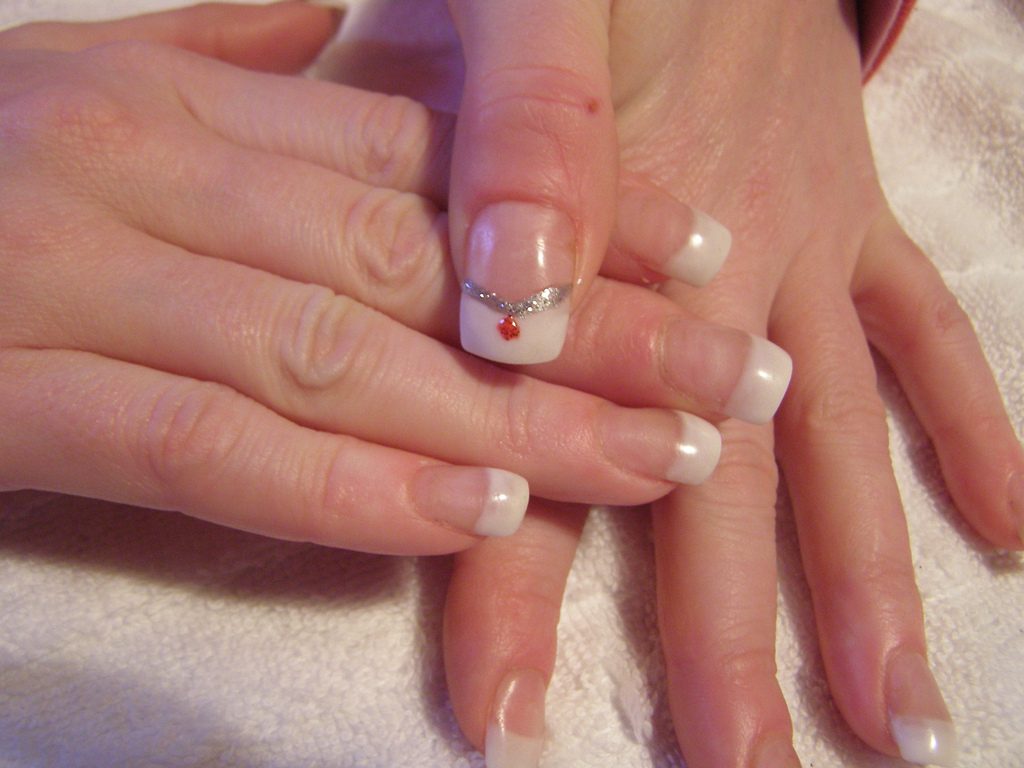
A Russian manicure is a dry manicure done with an electric file (e-file) and small rotating bits to clean the cuticle area in great detail, usually followed by gel polish applied very close to the skin. The result is an exceptionally neat finish that grows out gracefully, but it relies heavily on the technician’s skill, because the same tools that give precision can thin or injure the nail if used carelessly.
In this guide
How it differs from a regular manicure
In a classic manicure, fingers are soaked in water, cuticles are softened and pushed back, and loose skin may be nipped with clippers. In a Russian manicure there is usually no soaking. The technician works on dry skin, which keeps the nail plate stable and lets them see exactly what they are removing.
The aim is to lift and remove the thin layer of dead skin that sticks to the nail plate (the cuticle in the technical sense), and to tidy the sidewalls, without cutting into the living skin at the base of the nail, called the eponychium. Gel is then applied right up to that edge.
Russian manicure at a glance
- Technique: dry, with an electric file and specialist bits
- Usually combined with: gel polish or builder gel
- Typical appointment: often 1.5 to 2 hours
- Typical wear: commonly around 3 to 4 weeks before a refill
- Also called: e-file manicure, machine manicure, combi manicure (when nippers are also used)

Step by step
- Prep and shaping. Hands are sanitised, old gel is removed (often by e-file), and the free edge is shaped.
- Cuticle lifting. A fine bit, often diamond or ceramic, gently lifts the dead skin from the nail plate and cleans the sidewalls.
- Refining. Some technicians use small nippers to trim lifted skin; others work only with bits. This is where the “combi” name comes from.
- Nail prep. The surface is lightly buffed and dehydrated so gel bonds well.
- Gel application. Base, colour and top coat are applied very close to the skin and cured under a UV or LED lamp. Builder gel may be added to strengthen weak nails.
- Finishing. Cuticle oil and hand cream.
Russian vs regular manicure
| Feature | Russian (e-file) | Regular (wet) |
|---|---|---|
| Soaking | No | Usually yes |
| Main tools | Electric file, bits, sometimes nippers | Pusher, clippers, hand file |
| Cuticle finish | Very clean, close to the skin | Neat but less detailed |
| Coating | Almost always gel | Polish or gel |
| Wear | Often 3 to 4 weeks | Polish: days; gel: 2 to 3 weeks |
| Time | Longer | Shorter |
| Depends on technician skill | Very heavily | Moderately |
Our manicure types compared table puts this alongside Japanese, dip and acrylic options.
Is a Russian manicure safe?
It can be, in skilled and hygienic hands. Problems tend to come from three places.
Over-filing. Bits can thin the nail plate or leave grooves known as “rings of fire” at the base. Thin nails bend, split and feel sore.
Cutting into living skin. The cuticle and eponychium form a seal that protects the nail matrix from infection. Removing too much, or causing small cuts, can let bacteria or fungi in. Dermatologists often advise against aggressive cuticle cutting for this reason.
Poor hygiene. Metal bits and nippers must be cleaned and sterilised between clients. Anything that cannot be sterilised, such as files and buffers, should be single-use.
Signs something went wrong
- Bleeding during the service, or stinging when you wash your hands afterwards
- Redness, swelling, warmth or pus around a nail in the following days
- Nails that feel hot, thin or bendy after removal
See a doctor if you suspect an infection, especially if redness spreads or you have diabetes or poor circulation.
A great Russian manicure looks effortless. If you are watching blood or feeling burning heat from the drill, that is not the technique, it is the technician.
Choosing a technician in the UAE
Russian manicures became very popular in Dubai and Abu Dhabi, and many salons now list them. Quality varies a lot. Look for:
- recent close-up photos showing the cuticle area weeks after the appointment, not just fresh
- tools opened from sealed sterilisation pouches in front of you
- a technician who asks about your nail health first and adjusts if your nails are thin
- a licensed salon; beauty centres in the UAE are licensed and inspected by local municipalities
Prices in the UAE vary widely by salon, area and whether builder gel or nail art is included, so compare written menus rather than assume.
Who should skip it or ask a doctor first
- People with diabetes, poor circulation or immune problems, where small cuts carry more risk
- Anyone with an active nail infection, psoriasis or eczema around the nails
- Very thin, damaged or recovering nails, which may need a rest instead
- People who react to gel products; allergy to acrylates can cause itching and rash around the nails
Making it last at home
- Apply cuticle oil daily, especially in dry, air-conditioned rooms
- Wear gloves for cleaning and washing up
- Do not pick or peel the gel; book a professional removal
- Book refills before lifting appears, usually every three to four weeks
The home manicure checklist includes simple aftercare steps between appointments.
Frequently asked questions
Why is it called a Russian manicure?
The technique became widely popular in Russia and Eastern Europe before spreading internationally, and the name stuck. It is essentially an e-file dry manicure.
Does a Russian manicure hurt?
It should not. You may feel vibration or slight warmth from the file. Pain, burning or bleeding means the technique needs adjusting.
How long does a Russian manicure last?
Often three to four weeks, because the gel sits so close to the cuticle that regrowth is less visible. Nail growth speed and how you use your hands both affect this.
Can I get a Russian manicure with regular polish?
Some salons offer it, but regular polish chips within days, so the precise cuticle work is usually paired with gel.
Sources: American Academy of Dermatology, Dubai Municipality, Cleveland Clinic
Cover photo: lisa bentley, CC BY 2.0. Last reviewed: 2026-11-25. General information only, not medical advice. Please consult a licensed practitioner in the UAE about your own situation.