
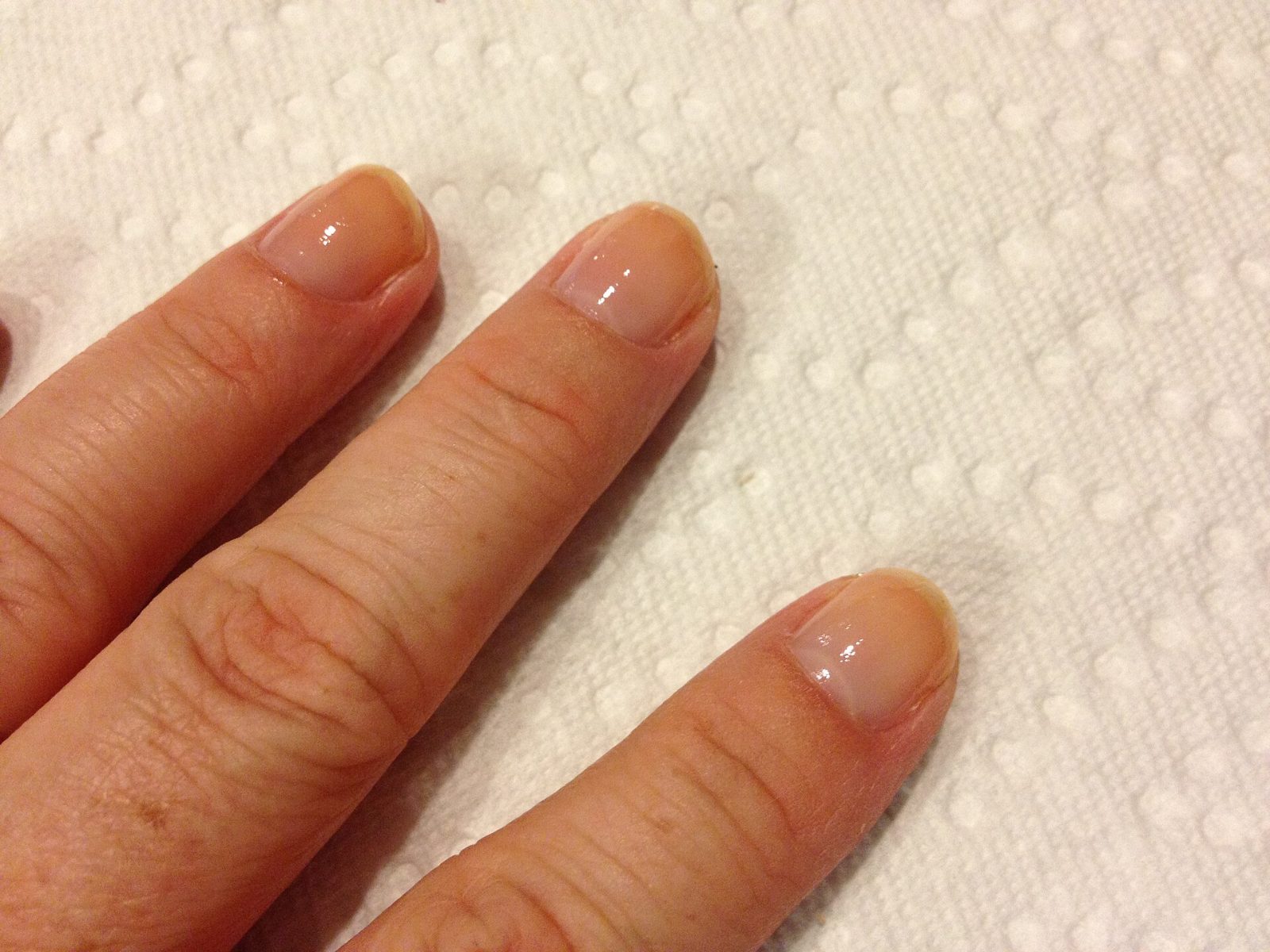
A dip powder manicure builds colour by layering a resin-like base liquid and finely milled coloured powder, then sealing it with an activator and top coat. No lamp is needed. It is harder and thicker than gel polish, often lasts three weeks or more, and comes off with a longer acetone soak. The main things to ask about are hygiene (how the powder is applied) and removal.
In this guide
How dip powder works
Dip systems use a bonding liquid based on cyanoacrylate chemistry, the same family of adhesives as nail glue. When coloured acrylic powder lands on the wet base, it sticks. Repeating the process builds a strong layer. An activator then hardens everything, and the nail is filed, shaped and sealed with a glossy top coat.
Step by step
- Nails are shaped and cuticles gently pushed back.
- The surface is lightly buffed and cleansed.
- A bonder or primer may be applied.
- Base liquid is brushed on, then powder is applied by dipping or pouring.
- Step 4 is repeated for two or three layers.
- Activator is applied and the nails harden.
- Nails are filed and buffed smooth.
- Top coat is applied, often in two layers.
Dip, gel and acrylic compared
| Feature | Dip powder | Gel polish | Acrylic |
|---|---|---|---|
| Lamp needed | No | Yes | No |
| Strength | High | Moderate | Very high |
| Thickness | Thicker than gel | Thin | Thick |
| Typical wear | Around 3 weeks or more | About 2 to 3 weeks | Infills every few weeks |
| Smell | Low | Low | Strong monomer smell |
| Removal | Longer acetone soak plus light filing | Acetone soak | Long soak and filing |
| Extensions | Possible with tips | Limited | Yes |
For a fuller comparison, see our manicure types compared page.
The hygiene question: dipping versus pouring
In the traditional method, each finger is dipped into a jar of powder. If that jar is shared between clients, powder that has touched one person’s nails and skin goes back into the jar for the next client. That creates an infection risk, especially if anyone has a fungal or bacterial nail problem.
Ask how the powder is applied
Safer salons use a pour-over method (powder is sprinkled over the nail above a separate dish and discarded) or give each client a fresh portion of powder. If a technician dips your fingers into a shared jar, it is reasonable to ask for the pour-over method or to choose another salon.
UAE salons are licensed by municipal authorities that set hygiene standards, and you are entitled to ask how products and tools are handled.
Who is dip powder good for?
- People who want long-lasting colour without a UV or LED lamp
- Those with weak, bendy nails who benefit from a harder layer
- Clients who dislike acrylic monomer smell
- Anyone who wants short to medium nails with strong, durable colour
It is less suited to people who change colour often, because removal takes longer than with gel or regular polish.
Removal without damage
Dip powder is thicker than gel, so removal takes patience:
- The top coat is filed to break the seal. Filing should stay on the product, not the natural nail.
- Nails are soaked in acetone or wrapped with acetone-soaked pads, usually for longer than for gel.
- Softened powder is gently pushed off.
- Stubborn areas get more soaking rather than scraping.
- Nails are buffed lightly, cleansed and oiled.
Give nails a breather
If nails feel thin after removal, take a week or two with only cuticle oil and a nourishing base coat before your next set.
Safety considerations
- Allergies. Cyanoacrylates and acrylates can cause allergic contact dermatitis. Itching, redness, swelling or blisters around nails, or on the eyelids and face, need medical advice.
- Dust. Filing creates fine dust. Good salons use extraction or ventilation and technicians often wear masks.
- Infection. Shared jars and lifted product can contribute to nail infections. Watch for discolouration under the product, pain or swelling.
People with known acrylate or cyanoacrylate allergies, active nail infections or skin conditions affecting the hands should avoid dip powder and consult a licensed dermatologist in the UAE.
Dip powder is durable and lamp-free; ask for pour-over application and take your time with removal.
Colours and finishes
Dip powders come in a very wide range: sheer pinks and nudes, opaque creams, glitters, shimmers and even ombre effects created by dipping only part of the nail in a second colour. French tips are possible with a white powder at the free edge, though the line is usually softer than a painted gel French. Because the colour is built from powder, very pale shades can look slightly less smooth than gel; ask to see a finished swatch nail. Matte top coats are also available if you prefer a non-glossy look.
Making a dip manicure last
Apply cuticle oil daily, wear gloves for cleaning and dishes, and avoid using nails as tools. Book removal or a new set at around three to four weeks, as growth shifts the balance point of the nail forward. Our home manicure checklist covers simple aftercare.
Frequently asked questions
Is dip powder better than gel?
It is harder and lasts longer for many people, without a lamp. Gel is thinner, looks more natural and is quicker to remove.
Does dip powder damage nails?
Not necessarily. Damage usually comes from heavy filing and forceful removal, or from wearing it too long.
Can I do dip powder at home?
Home kits exist. Use your own powder only, apply thin layers and follow removal steps carefully.
How long does dip powder last?
Often around three weeks or more, depending on nail growth and daily habits.
Sources: American Academy of Dermatology, U.S. Food and Drug Administration, nail care products, Dubai Municipality
Cover photo: Espejop2319, CC BY-SA 4.0. Last reviewed: 2026-11-25. General information only, not medical advice. Please consult a licensed practitioner in the UAE about your own situation.